Why Cervical Pain Shouldn't Be Ignored: A Neurologist's Perspective
By Dr. Sudheer Pandey · February 2, 2025
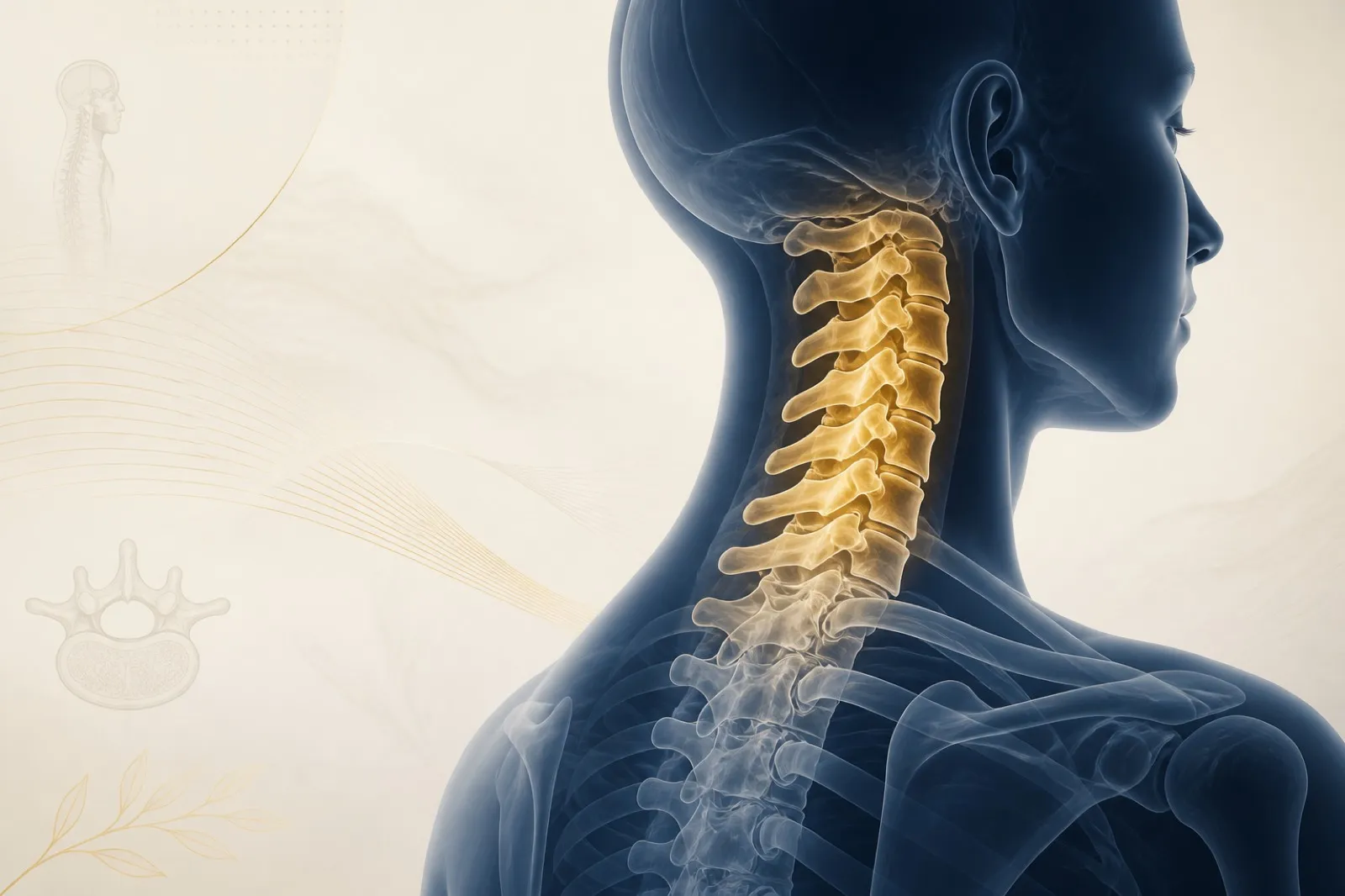
Cervical pain — pain originating from the neck — has become a daily complaint for millions, driven by hours spent over phones, laptops and steering wheels. Most of it is mechanical and improves with simple treatment. But some forms can damage nerves if ignored, and recognising the difference is where a neurologist's view becomes important.
Pure neck pain, without arm symptoms, is almost always mechanical. The muscles, ligaments and small facet joints of the cervical spine become irritated by prolonged poor posture, sudden movements or age-related wear. A few weeks of activity modification, posture correction, gentle exercise and short-term medication usually resolves the problem.
Cervical spondylosis — wear and tear of the cervical discs — is so common after age 40 that it appears on most adults' scans. By itself, finding spondylosis on an MRI doesn't necessarily mean anything serious. It must be correlated carefully with symptoms.
What changes the picture? Three key warning features. First, pain that radiates down the arm — particularly with tingling or numbness in specific fingers — suggests a nerve root is being compressed. Second, weakness in the hand or arm, even subtle (dropping things, weak grip, difficulty with fine tasks). Third, symptoms in the legs (imbalance, heaviness, bladder changes) suggest the spinal cord itself is involved — a more serious situation called cervical myelopathy.
When these features are present, prompt assessment matters. An MRI defines what is happening to the nerve roots and spinal cord. Most patients are still managed without surgery — using a structured combination of medication, posture correction, focused physiotherapy and ergonomic adjustments. The vast majority improve substantially within 6–12 weeks.
Surgery is reserved for patients with significant nerve compression and neurological deficit, or progressive myelopathy. Modern minimally invasive procedures have made surgery safer and recovery faster, but it is genuinely needed in a small minority of patients.
Prevention is straightforward and powerful. Screen height at eye level, phone use without bending the neck for long periods, regular short breaks from desk work, daily neck mobility exercises, and an ergonomic workstation can dramatically reduce both new episodes and recurrences.
If your neck pain is mild and mechanical, simple measures will usually fix it. If it comes with arm pain, numbness, weakness or any leg symptoms, do not delay — a focused neurological assessment with Dr. Sudheer Pandey can prevent a treatable problem from becoming a permanent one.