Early Signs of Parkinson's Disease Most People Miss
By Dr. Sudheer Pandey · February 10, 2025
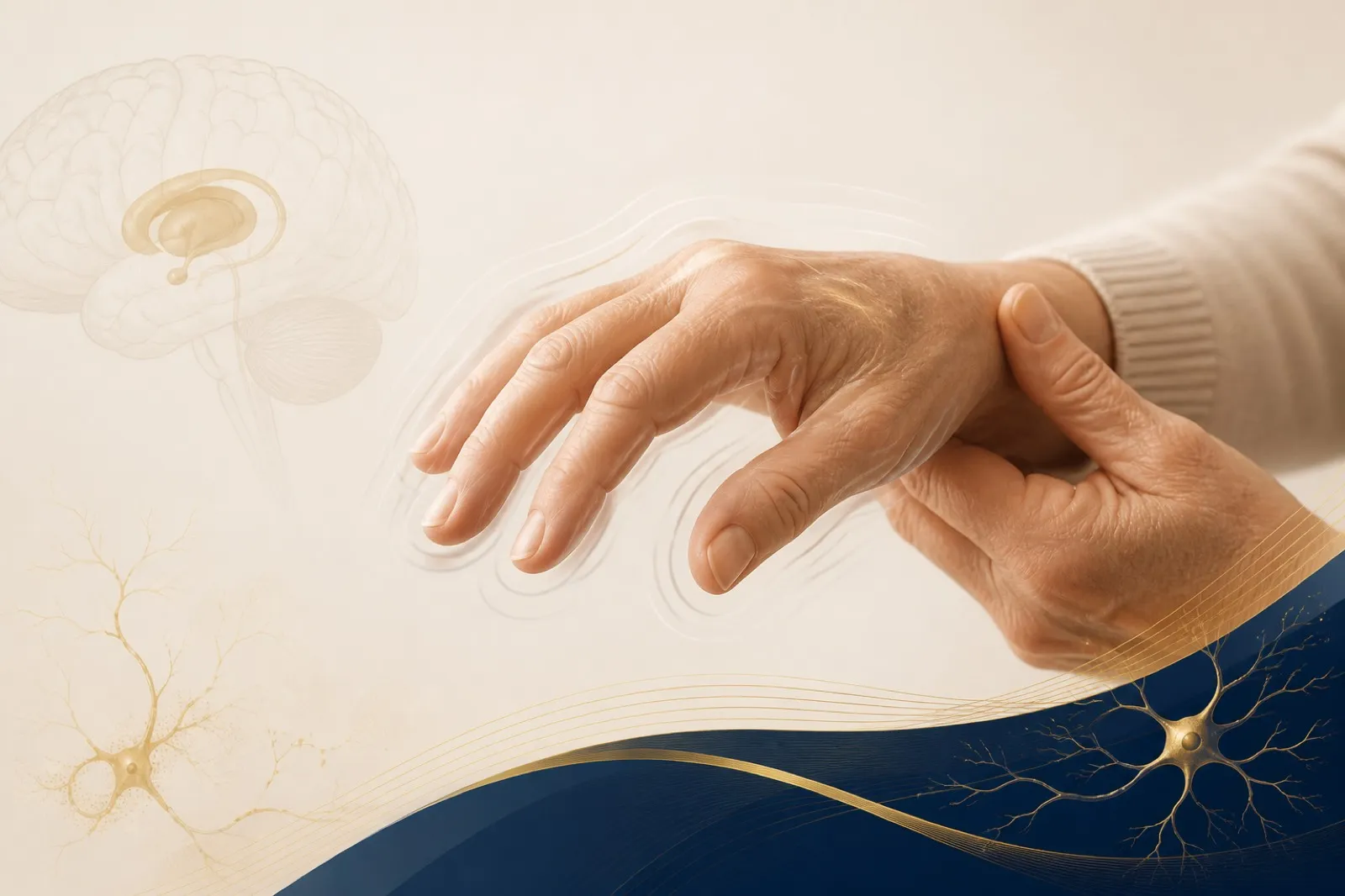
When most people think of Parkinson's disease, they think of a visible hand tremor. But by the time tremor appears, the underlying brain changes have often been progressing silently for years. Recognising the earlier, subtler warning signs is increasingly important as treatments improve.
Loss of smell is one of the most common early signs, sometimes appearing a decade before any movement problem. Coffee, perfume and food may seem strangely flavourless. Although many other things can affect smell, persistent unexplained loss deserves attention.
Acting out dreams during sleep — known as REM sleep behaviour disorder — is another important early sign. Patients punch, kick or shout in their sleep, often injuring themselves or their partner. A significant proportion of people with this disorder go on to develop Parkinson's or related conditions years later.
Subtle changes in handwriting are highly characteristic. The script becomes smaller and more cramped, especially toward the end of a line or paragraph — a feature called micrographia. Friends and family may notice you sign your name differently or struggle with forms.
Movement changes can be remarkably subtle at first. A slight reduction in arm swing on one side while walking, a softening of the voice that others mention before you notice, mild stiffness in one shoulder that doesn't respond to physiotherapy, or a slight slowness with tasks like buttoning shirts or tying laces.
Non-motor symptoms are equally important. Constipation, mood changes (especially low mood or anxiety), reduced facial expression noticed by others, and a tendency to feel mentally 'slowed down' can all precede the classic motor features by years.
Why does early recognition matter? While Parkinson's cannot yet be cured, modern treatment can control symptoms remarkably well for many years. Earlier diagnosis allows medications to be optimised, exercise programmes to begin (exercise has clear disease-modifying effects), and patients to plan their lives proactively.
If you or a family member notice several of these features persisting over months, a neurology consultation with Dr. Sudheer Pandey in New Delhi is worthwhile. The examination is detailed but painless, and a clear diagnosis — even when it confirms Parkinson's — is far better than years of uncertainty.